Africa Cup of Nations: Beyond the pitch, the economic benefits of the competition
Regardless of the final outcome of the Africa Cup of Nations, it will have been a major turning point in the evolution of the continent’s major sporting competitions. According to a recent report by strategic consulting firm and intelligence platform dedicated to the pan-African sports economy (Africa Sports Unified), « AFCON 2025 marks a major turning point in the evolution of African football as a world-class sports and commercial asset «. The AS Unified report provides a data-driven analysis of how AFCON 2025 is being repositioned as a premium global sports asset, covering pricing, media distribution, partnerships, infrastructure, digital engagement, and long-term commercial strategy.
■ Unprecedented international visibility
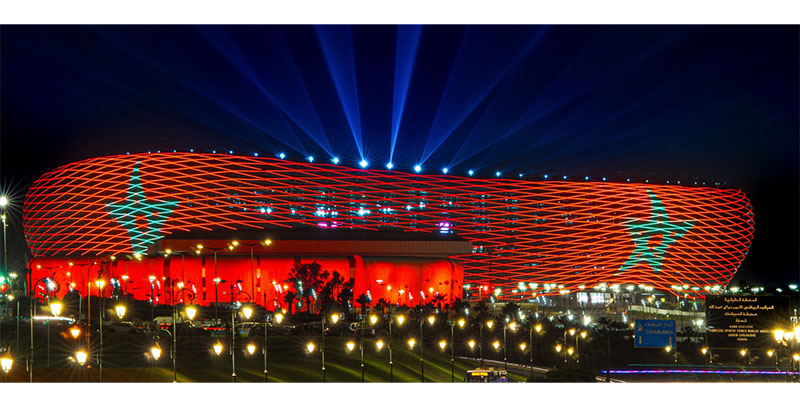
Among the key findings of this study is a record prize of US$10 million for the winner (Senegal), with a total prize pool of US$32 million. Furthermore, for the first time in its history, the Africa Cup of Nations (AFCON) benefited from unprecedented international visibility. There was a major expansion of international broadcasting, notably in the United Kingdom via Channel 4, as well as in Spain (Movistar), Portugal (Sport TV), France, the United States, the Middle East, and more than 85 other markets worldwide. In addition, this edition of AFCON was the first to be entirely produced in HDR, with new international broadcasting standards. The report also highlights the quality of services provided by the host country and, above all, Morocco’s integrated approach to infrastructure, stadiums, hospitality, transportation/mobility, and cutting-edge technologies throughout the competition.
“ The 2025 AFCON represents a structural shift in how African football is positioned globally ” , said Gabriel Ajala, founder of Africa Sports Unified. «It is no longer just a continental tournament, but a global platform for media, trade, international visibility and national promotion ,» the same report added.
■ Lever for economic growth
While it is still too early to draw up a comprehensive assessment of the full impact of the Africa Cup of Nations in Morocco, a number of positive indicators point to significant gains. Indeed, initial analyses confirm that the event transcends the sporting arena to become a genuine driver of economic growth.
Expert estimates predict direct and indirect economic benefits ranging from 5 to 12 billion dirhams (US$ 544 million to 1.3 billion). Tourism, hotels, urban mobility, intercity transport, airport passenger traffic, consumption, commerce… all these sectors benefited from a surge in visitors during what is usually a slow season (December-January).
Air transport Increasing momentum
Air transport is a key indicator of the success of the Africa Cup of Nations. According to airport authorities, passenger traffic intensified about ten days before the competition’s opening match, which took place on December 21, 2025, in Rabat. However, the historic peak in arrivals was recorded on December 18. Casablanca International Airport was the main gateway to Morocco, accounting for one-third of the total traffic of the cities hosting the AFCON matches. In total, the six cities that hosted AFCON matches hosted more than 868,000 passengers, with more than 7,300 flight movements (+13% compared to the same period in 2024).
Consumption, leisure, tram, train
Theoretically, the significant increase in visitors/supporters in the six host cities (Rabat, Casablanca, Marrakech, Agadir, Fez, Tangier) injects more spending and consumption into restaurants, leisure activities, and retail (shopping, gifts, souvenirs, crafts, etc.). It should be noted that the Fan Zones have made it possible to extend tourist consumption and leisure activities beyond the neighborhoods near the stadiums. The organization of fan zones has also made it possible to promote lesser-known destinations thanks to sites set up in cities such as Essaouira, Oujda, Laâyoune, and other cities. It should be noted that inter-city and intra-urban mobility via tram, bus, taxi, and online platforms experienced high turnover. Peak ridership was recorded by the trains of the national railways company as well as the High-Speed Train, the Rabat and Casablanca tramways, and other means of transportation.
Tourist appeal & hotels
f there’s one sector that benefited most from the Africa Cup of Nations (AFCON), it is tourism. The tournament saw massive influxes of tourists, fans, diasporas, technical staff, and officials from participating countries. According to tourism professionals, this flow began in the lead-up to AFCON, with a gradual increase in activity. The peak season coincided with the end-of-year holidays and the Christmas break. This period, which saw the surge in visitors with massive arrivals of fans, ran from December 20, 2025, to January 5, 2026. This was followed by a period coinciding with the quarter-finals, semi-finals, and final (between January 05 and 18).
The competition effect and the end-of-year festivities have brought in more visitors, estimated at over 1 million, including foreign supporters, diasporas from their respective countries, Moroccans from around the world… This is evidenced by the main indicator of hotel occupancy rates and arrivals at airports, mainly in the cities of Casablanca, Rabat, Tangiers, Fez, Marrakech, and Agadir… According to tourism professionals, occupancy rates approached 100% in some hotel establishments, particularly in cities like Rabat and Marrakech.
Amin RBOUB