Country risk: Robust growth, structural challenges

I As the Kingdom prepares to host major sporting events and consolidate its position as an energy hub, Morocco is showing resilient economic health. According to the new edition of Allianz Trade-Research’s “ Country Risk Atlas 2026: Under the surface”, published in February 2026, Morocco is maintaining a sustained growth trajectory, although social and structural disparities persist. The country, rated B1 with low corporate risk, is enjoying increased international recognition, particularly since being upgraded to investment grade by S&P in September 2025.
-Ambitions for 2030: The macroeconomic outlook for the Kingdom is optimistic. Morocco’s GDP is expected to grow by +3.7% in 2026, before stabilizing at +3.5% in 2027. This performance, which is above the average for previous years, marks a break with the volatility observed during the global financial crisis and the pandemic. Several factors explain this strength. On the one hand, industrial production is benefiting from massive foreign direct investment (FDIs) in the manufacturing, energy, and mining sectors. On the other hand, the agricultural sector, long hampered by drought, is finally recovering. Tourism is also breaking records: arrivals are expected to grow by 20% this year, boosted by the 2026 Africa Cup of Nations. Inflation is expected to remain moderate at 1% year-on-year in 2026.
■ Phosphates and automotive industry: The driving forces behind exports
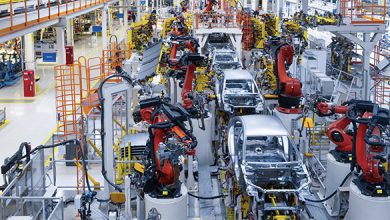
The “ Country Risk Atlas 2026 ” highlights the successful diversification of Moroccan exports. Phosphates experienced a spectacular recovery in 2025 with 20% growth, driven by global demand linked to food security. At the same time, the automotive sector is confirming its status as an “ economic pillar ”. In 2023, Morocco exported more than 500,000 vehicles to the European Union, a figure comparable to those of China or Japan. Although the sector slowed down in early 2025 due to US trade tensions and European dynamics, domestic production remains strong. In terms of energy, the Kingdom aims to become a hub connecting African supply with European demand.
■ Public finances stabilized but under surveillance
Morocco’s macro-financial management is praised by Allianz Trade analysts. The debt-to-GDP ratio, which reached 70% in 2024, is on track to fall to 65% by 2027. The budget deficit is expected to be contained at an average of -3% of GDP until 2027. This prudence enabled Morocco to successfully issue two Eurobonds in March 2025 (€2 billion) and to see its interest rate spreads perform well. However, some areas of concern remain. Several public companies remain heavily indebted, despite the announcement of a reform plan. Bank Al-Maghrib is maintaining a cautious policy, with a key interest rate of 2.25%, while preparing for full dirham flexibility in 2026.
F.Z.T.