E-invoicing: The rules of the game are becoming clearer
The platform dedicated to electronic invoicing, along with the entire supporting ecosystem, is on the starting blocks. Its launch remains contingent on the publication of a decree that will set out the operating procedures and implementation schedule. “The expected decree should, in particular, define the taxpayers concerned, the effective date of the system, etc.
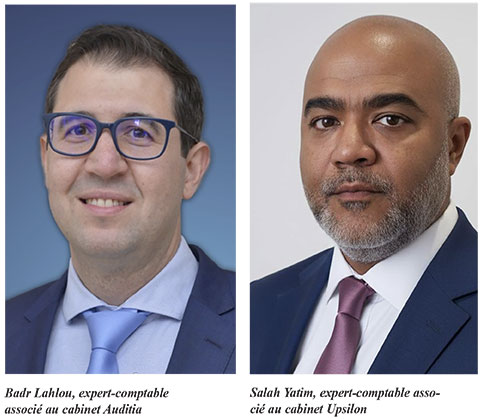
It should also cover the specifications to be imposed on companies wishing to become service providers approved by the tax administration for managing the issuance and receipt of electronic invoices without going through the DGI,” explains Badr Lahlou, partner and chartered accountant at Auditia.
“I assume it will be a technical decree addressing a number of aspects such as the format of e-invoicing, data storage methods, authentication of parties, the definition of taxpayers—B2B or B2C—turnover thresholds, the exact timeline, invoicing models based on CII or UBL 2.1 formats, etc.,” adds Salah Yatim, partner at Upsilon Consulting.
E-invoicing could be implemented in practice depending on companies’ turnover levels—but not only that.
Individuals not concerned in the short term
The tax administration specifies that other criteria may also come into play, taking into account, for example, business segments, types of markets or activities. No final decision has yet been made in this regard. The Director General of Taxes recently announced that the legislator would take into account the specific features of the national economy as well as international experience. One thing is certain: individuals will not be concerned in the short term.
“I am not as optimistic as the administration regarding the rapid implementation of this project. In case of difficulties, it could be abandoned or applied partially, for instance by limiting it to companies with turnover exceeding MAD 100 million. Can we really imagine a taxpayer asking a plumber for an XML invoice to justify an expense on a platform? In France, where digitalization is more advanced, the issue remains complex. Recently, I met an accountant still working with MS-DOS software, a single computer and an assistant entering handwritten documents. The level of digitalization among Moroccan SMEs remains generally low,” adds Salah Yatim.
The head of the tax authority does not share this view: “I have no doubt about the ability of Moroccan companies to adapt and innovate, as seen with Kenyan, Nigerian and Cape Verdean companies. This does not mean that the DGI will leave them on their own, but rather that it will support them.”
Payment terms, VAT, fictitious invoices…
Will e-invoicing put an end to practices aimed at circumventing the law and avoiding penalties for late payment? Younes Idrissi Kaïtouni, Director General of Taxes, has been clear on this point.
“The e-invoicing workflow will run from the client to the supplier, with acknowledgment of receipt. A client will therefore no longer be able to dispute the receipt of an invoice to manipulate payment deadlines. We have embedded self-control functions within the client-supplier system. Until now, they required external control from the tax administration. Today, they monitor each other.”
The future system will also make it possible to curb the phenomenon of fictitious invoices used to unduly recover VAT. Value-added tax will only be deductible if it has actually been paid.
H.E.