Editorial – “Game Changer”

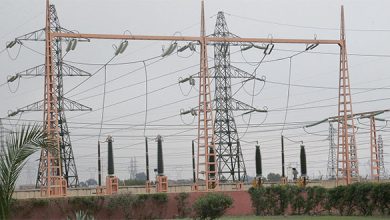
Roads, ports, industrial zones, energy: for two decades, Morocco has invested, structured, and connected. This choice was necessary. But every model eventually runs out of steam. Today, what once underpinned the country’s strength is becoming its limitation. An economy can no longer move forward sustainably on public support alone. This is the conclusion of the World Bank’s Country Private Sector Diagnostic for Morocco (see our analysis on pages …).
Today, the engine must change, and private initiative must be unleashed. Yet it remains constrained, fragmented, and hesitant. When private investment accounts for only one-third of total investment, it is not a matter of willingness, but of the playing field. The weight of public enterprises continues to shape entire markets. Informality, on a massive scale, has created a two-speed economy. Financing, meanwhile, barely reaches SMEs. Capital exists, but it does not flow where it can truly drive transformation. The labor market faces similar constraints: a skills deficit and slow productivity growth. At this pace, catching up will take a generation.
Then there is the persistent thorn in the side: land, which delays or blocks viable projects.
Beyond the diagnosis, however, the report outlines a pathway through four sectors that could trigger a breakthrough: decentralized solar, low-carbon textiles, processed argan, and marine aquaculture. Together, they represent a potential of $7.4 billion in private investment and nearly 166,000 jobs in the medium term. What do they have in common? They lie at the heart of the new global economic geography: decarbonization, circular economy, resource valorization, and the blue economy.
But their takeoff depends on the effective implementation of reforms. In a world reshaped by carbon constraints and nearshoring, the advantage is being decided now—not tomorrow. The challenge is to unlock all our “game changers.”