Editorial – Transitions

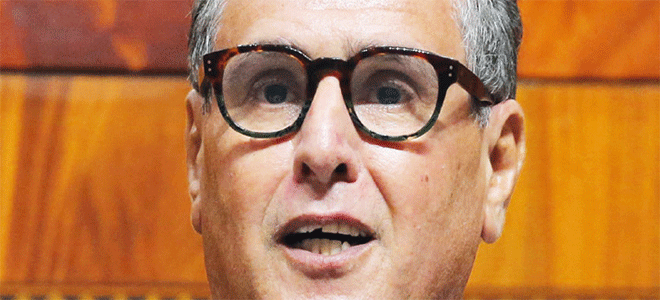
At the central bank (Bank Al-Maghrib), caution is a methodical choice. The latest press conference given by Wali, Abdellatif Jouahri, provided a new illustration of this, both educational in form and deeply strategic in substance.
“We will move slowly.” This phrase, which has become something of a signature, sums up Morocco’s approach to monetary reform. Whether it is the liberalization of the exchange rate regime or the transition to inflation targeting, BAM is moving forward in stages, without ever giving in to the temptation to take a giant leap.
The first phase of dirham flexibility has been initiated, and work on inflation targeting is underway, but the Central Bank refuses to rush. 2026 will be a test year, a pilot phase in which the old and new frameworks will coexist, before possible operational implementation in 2027, and even then, without any automatic link to a new stage of exchange rate liberalization.
This sequence reflects an awareness of the specificities of the Moroccan economy, the structure of its players, and the real capacity of operators to absorb change.
The same logic prevails in the decision to maintain the key interest rate at 2.25%. In a highly tense international context, the choice of the status quo may seem conservative. While some central banks have abruptly tightened their policies at the risk of stifling economic activity, BAM has opted for careful cycle management, paying close attention to internal dynamics, as domestic signals are generally favorable.
But beware of blind optimism, because behind these figures lie real weaknesses. Morocco must continue to identify what is not working well (or at all), develop and reform. It must know how to negotiate the right turns at the right time in order to successfully navigate all the transitions ahead.