FDI Accelerates Economic Momentum
Morocco’s attractiveness continues to deliver results, driven by international investor confidence and the momentum generated by major structural projects. According to the “Monthly Foreign Trade Indicators as of End-July 2026,” published by the Foreign Exchange Office on September 1, 2026, Foreign Direct Investment (FDI) receipts reached MAD 39.1 billion, up 6.3%. At the same time, disinvestment transactions fell by 47% to MAD 9.6 billion. These combined trends automatically pushed net FDI inflows to MAD 29.5 billion, a 58.5% surge. This influx of foreign capital demonstrates the resilience of Morocco’s economic model in the face of global geopolitical shocks.
The rise in FDI confirms Morocco’s attractiveness and supports the growing strength of its industrial and export base
– A dynamic business climate: Beyond the balance of payments, these flows are taking place against the backdrop of a buoyant domestic business environment, characterized by renewed corporate strength and substantial public support. The DEPF report shows that Corporate Income Tax (CIT) revenues jumped 24.9% to MAD 69.4 billion at the end of July 2026, reflecting the momentum of voluntary tax payments and the level of corporate profitability. This favorable environment is also reflected in the improvement in the manufacturing sector’s Capacity Utilization Rate, which stood at 77.9% in the second quarter of 2026.
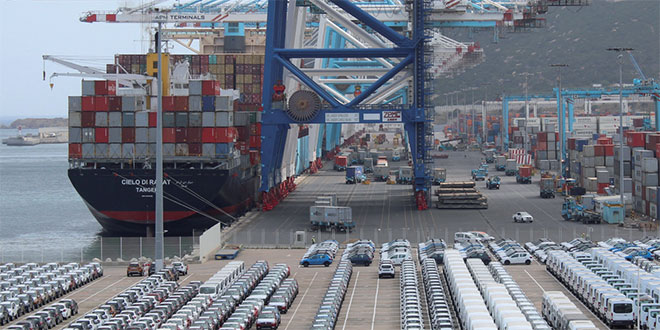
– Exports post strong growth: The rise in FDI is directly reflected in export performance, a key driver of economic growth. According to the DEPF’s August 2026 economic outlook report, goods exports increased by 9.7% at the end of June to MAD 260.4 billion, driven notably by the automotive sector (MAD 93.7 billion, +17.4%) and the aerospace industry (MAD 17.3 billion, +19.3%).
– FDI as a macroeconomic buffer: Against a backdrop of a rising import bill fueled by geopolitical tensions, FDI, combined with the increase in travel receipts (MAD 79.0 billion, +13.4%) and remittances from Moroccans living abroad (MAD 74.8 billion, +8.1%), is playing a vital role as a macroeconomic buffer. These foreign currency inflows helped lift official reserve assets to MAD 497.3 billion at the end of June 2026, up 22.2% year-on-year. The presence of FDI in advanced export-oriented industries, particularly automotive and aerospace, is thus transforming the structure of Morocco’s exports, helping the Kingdom shift away from dependence on raw materials toward an economy with greater industrial complexity.
Fatim-Zahra TOHRY