Finance Act: 300 billion Dirhams for social spending
The amounts allocated to social spending in the 2026 Finance Act are staggering: 300 billion Dirhams (USD 32.9 billion). This significant budget represents 54% of the Government budget, excluding debt expenditure.
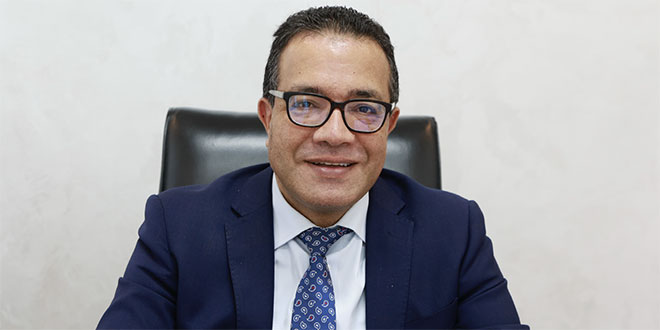
“The royal vision of the welfare State is underway, with 300 billion dirhams (USD 32.9 billion) earmarked for social spending in the 2026 budget ”, says Aziz Khayati, Director of Budget at the Ministry of Finance. (Photo by Bziouat)
This program reflects the royal vision of the welfare state. Aziz Khayati, Director of Budget at the Ministry of Economy and Finance, made this clear during a roundtable discussion in Rabat. While the concept of the welfare state has been overused, a document now summarizes the efforts made in this area. Khayati was keen to make an important point. The financing of these social expenditures has been made possible by an increase in Government resources. Indeed, total tax revenues are expected to reach MAD 376 billion (USD 41.2 billion) in 2026. This represents a significant effort in terms of revenue collection and the implementation of tax reform. With this revenue momentum, it will be possible to finance not only social spending but also other major investment projects. This has also helped restore macroeconomic balance, with the budget deficit falling to 3.5% of GDP this year and 3% in 2026, and debt falling to less than 66% of GDP.
One of the components of the welfare State is the territorial dimension of integrated development projects. The new approach in this area is based on dialogue with partners and citizens at the local level, and a development vision centered around four or five priorities established by the citizens concerned. The list includes employment, strengthening basic social services, etc. Territoriality is taking shape with ongoing dialogue in 75 provinces, noted the Budget Director. The financial dimension has also been integrated into a special account of MAD 20 billion (USD 2.19 billion), created for this purpose. Added to this is modern governance, which will enable the integration of the various programs. Moreover, citizens can follow the implementation of these projects through a dedicated portal. Constitutional bodies such as the Court of Auditors and the Integrity and Anti-Corruption Authority will be involved. This approach to territoriality is considered to be the real materialization of devolution.
Mohamed CHAOUI