Foreign trade: Deficit widens, coverage rate falls to 58.5%
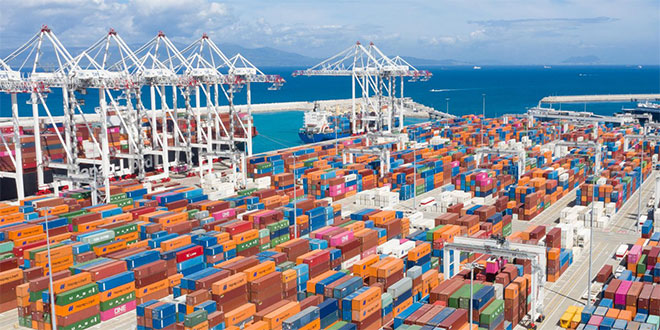
The trade deficit widened by 15.9% at the end of July 2025, reaching MAD 194.9 billion (USD 21.42 billion). At the same time, the goods coverage rate fell by 2.6 points to 58.5%, compared with 61.1% a year earlier.
In other words, despite the growth in exports, foreign sales remain far from offsetting the strong momentum of imports. The economy continues to suffer from a structural imbalance: domestic demand, driven by investment needs and final consumption, is fueling an external bill that is struggling to balance.
Exports reached MAD 274.8 billion at the end of July, up 4.2% year-on-year. But behind this overall figure, sectoral contrasts remain marked. The phosphate and derivatives sector remains the main driver (+20.9% to MAD 55.18 billion (USD 6.09 billion), buoyed by higher sales of fertilizers, raw phosphates, and phosphoric acid. The aerospace industry continues its upward trajectory (+8.9% to MAD 16.7 billion), thanks to the performance of EWIS assembly and wiring, confirming Morocco’s growing integration into global value chains.
The automotive sector, long the driving force behind exports, declined slightly (-1.8% to MAD 90.7 billion (USD 10.04 billion). However, the pace of decline is slowing, suggesting a possible stabilization. According to the High Commissioner’s Office for Planning (HCP), this decline is due to temporary technical and commercial problems, as well as the accelerated transition of European markets toward electric and hybrid vehicles. In this context, domestic production will have to gradually align itself with the new orientations of the European market, the sector’s main outlet.
The textile and leather sector, meanwhile, declined by 3.3%, affected by lower sales of ready-to-wear clothing (-3%) and knitwear (-5.7%). The technical textiles niche nevertheless posted remarkable growth (+34.6%), a sign of a gradual move upmarket. However, the outlook remains cautious: exports in the sector are expected to grow moderately in 2025 and 2026, held back by sluggish international demand, particularly in Europe, the main market for Moroccan textiles, and by increased competition in an uncertain global economic environment.
Khadija MASMOUDI