Morocco Loses a Great Friend, the World Loses an Exceptional Thinker
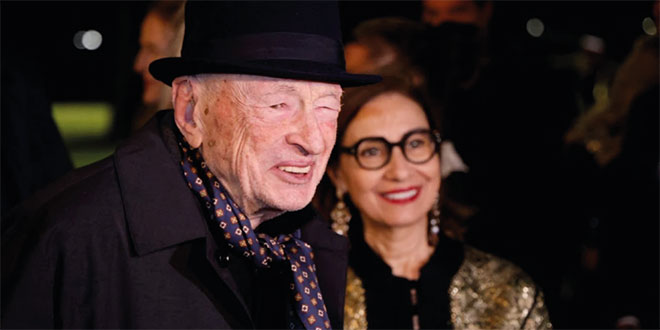
Edgar Morin with his wife in Rabat for the thinker’s centenary in 2024 (Ph. Ludovic Marin/AFP)
Edgar Morin passed away on May 29 at the age of 104. A sociologist, philosopher, anthropologist, writer and theorist of complex thinking, he leaves behind a body of work that profoundly shaped contemporary human and social sciences.
A major intellectual figure of the twentieth and early twenty-first centuries, Morin maintained for many years a personal and intellectual relationship with Morocco, where he regularly stayed, particularly in Marrakesh, alongside his Moroccan wife, Sabah Abouessalam.
Over the years, Marrakesh became far more than a temporary destination for him. He spent several months there every year and found in the city an environment conducive to reflection, writing and intellectual exchange.
In an interview with Le Parisien in 2025, he explained that he came to Morocco “during the bad season,” attracted by the country’s light, climate and human environment.
Contemporary Transformations of the World
His stays in Morocco coincided with a particularly productive phase of his intellectual life, even after surpassing one hundred years of age.
His attachment to Morocco was longstanding, dating back to the early years following the Kingdom’s independence.
Over the decades, he multiplied conferences, academic exchanges and cultural encounters there. His marriage to Sabah Abouessalam, a recognized specialist in urban sociology, further strengthened this connection. Together, they published several texts devoted to relations between Northern and Southern societies and to contemporary global transformations. For several generations of readers, Edgar Morin remains above all the theorist of “complex thinking.”
This concept, developed throughout his monumental work, La Méthode, proposes an approach based on the interdependence of human, social, political, cultural and ecological phenomena. In opposition to fragmented readings of reality, he advocated for a mode of thought capable of connecting knowledge and integrating contradictions rather than erasing them.
His intellectual influence extended far beyond sociology. His work inspired researchers, teachers, philosophers, urban planners, ecologists and education policymakers around the world.
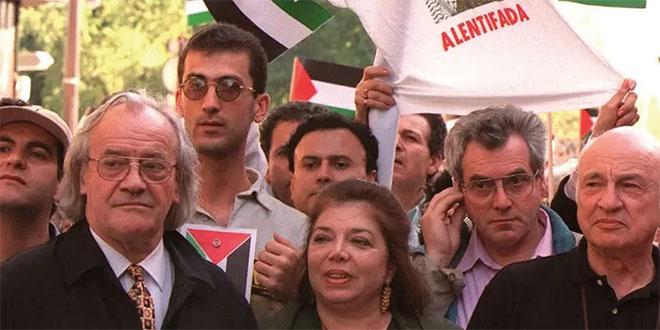
In Paris, 1998. Edgar Morin alongside Leila Chahid during the demonstration commemorating the 50th anniversary of the Nakba (Ph. Jack Guez/AFP)
An Independence of Thought That Was Sometimes Uncomfortable
His books have been translated into numerous languages and continue to be studied in universities far beyond France. His work also found particular resonance in Latin America, where his reflections on complexity, education and democracy achieved wide circulation.
This intellectual trajectory was built upon a constant rejection of orthodoxies. A member of the Resistance during the Second World War, a communist activist in his youth before breaking with Stalinism, Edgar Morin consistently defended an independence of thought that was sometimes uncomfortable. This posture led him to intervene regularly in the major debates of his era, from globalization and ecological crises to the transformations affecting contemporary democracy.o
Amine Boushaba