National Industry Day: «Made in Morocco» will have to earn its stripes
«In the next two to three years, the ‘Made in Morocco’ must become a globally known and recognized label» , announced Karim Zidane, Minister Delegate for Investment, Convergence, and Evaluation of Public Policies.
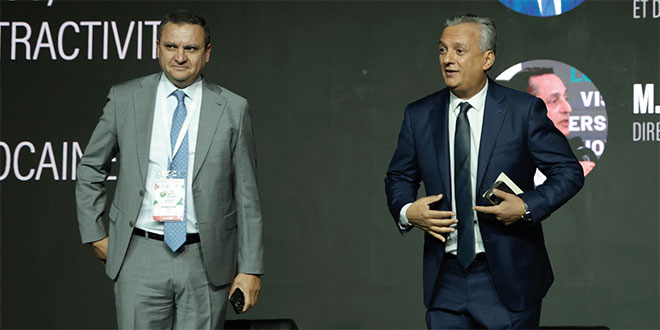
According to Mohamed Bachiri , CEO of Renault Morocco, «Today, vehicles produced in Morocco are very well received in Europe. We export cars to 60 countries, mostly European. A few years ago, we were playing in the Botola (The Moroccan League) . Today, we are playing in the Champions League.»
This ambitious statement sets new challenges and outlines the future direction of Moroccan industry. He made this statement during a panel discussion on «Made in Morocco as an Accelerator of the National Platform’s Attractiveness» at the 3rd National Industry Day. Today, according to several industrialists and institutional representatives, Moroccan industry has matured and gained sufficient recognition that it must set a new course. A kind of springboard towards the industries of the future.
To achieve this, the «made in Morocco» label must move beyond its perception as a mere overused slogan. Today, it is destined to become a guarantee of quality, innovation, reliability, and rigor.
«The Investment Charter is a catalyst for transformation that perfectly complements these new directions for Moroccan industry. It will now provide a fertile ground for attracting both national and international investors. The objective is to promote innovation, jobs, territorial equity, social inclusion, industrial development…», declared Minister Karim Zidane.
To achieve the expected goals, the Investment Charter offers numerous incentive packages, employment bonuses and added value bonuses…, added Zidane. Nonetheless, today, the Charter alone will not be enough to trigger a comprehensive industrial momentum, nor to change perceptions and stereotypes about products made in Morocco. In other words, other avenues will need to be explored. Among these are the development of national champions, particularly among SMEs, the promotion of success stories, and the leveraging of the achievements of large industrial groups. On this specific subject, Morocco has many examples to highlight.
The Renault Group has been cited as a model of success and international reach for Moroccan industry. According to Mohamed Bachiri, CEO of Renault Morocco, «Today we are the Renault Group’s second largest production site in the world, after France. Renault Morocco’s plants represent 20% of the manufacturer’s total production «. This demonstrates that the automotive industry is a concrete example to be replicated in other sectors. Mohamed Bachiri added, saying that «vehicles produced in Morocco are very well received in Europe. We export cars to 60 countries, primarily European. A few years ago, we were playing in the Botola ( Moroccan football league ). Today, we’re competing in the Champions League». This storytelling can inspire other future export champions, SMEs in cutting-edge sectors with a high dose of innovation.
Amin RBOUB