Oil Prices: Lekjaâ Sets the Record Straight
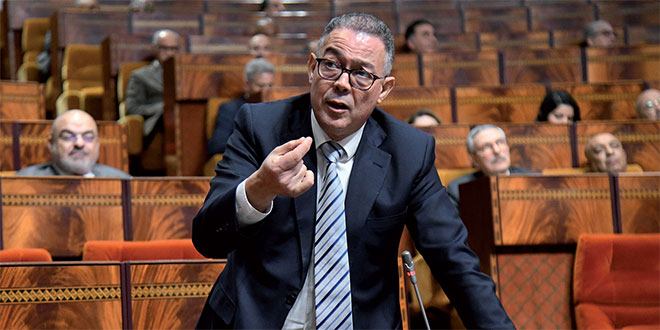
Despite the war in the Middle East and its repercussions on energy prices, Fouzi Lekjaa sought to reassure parliamentary groups in the House of Councillors. His first message focused on the resilience of the Moroccan economy in the face of the crisis. One of the most telling indicators is the increase in foreign exchange reserves. At the end of April 2026, reserves reached 469.8 billion dirhams, up 23.4% compared with the same period in 2025. This represents the equivalent of 5 months and 24 days of imports.
The second message from the minister in charge of the Budget concerned the strong momentum of public finances. The implementation of the 2026 Finance Law has continued through an active resource mobilization strategy. By the end of last April, tax revenues had increased by 10.4 billion dirhams, nearly 8.5% higher than during the same period in 2025, with an achievement rate of 36.3% compared with the forecasts set out in the 2026 Finance Law. This momentum has been driven in particular by the exceptional growth in corporate tax revenues. These rose by 9.1 billion dirhams, marking a 25% increase compared with the same period in 2025, with an achievement rate of 48.1% relative to the initial Finance Law forecasts.
Growth Prospects Revised Upward
This in itself constitutes a remarkable performance. The good news is that this momentum coincided with the latest rainfall. The cereal harvest is therefore expected to reach 90 million quintals, paving the way for an upward revision of growth forecasts. The national economy is expected to record a growth rate of 5.3% this year.
Over the past few weeks, voices in the public debate had been calling for these additional revenues to be redirected to citizens. The minister used the opportunity to set the record straight by clarifying two important points.
The first concerns the additional tax revenues generated by petroleum products. In reality, the situation is quite different. Customs duties are not applied to imports of petroleum products. Furthermore, by its very nature, the domestic consumption tax (TIC) is calculated on the basis of volumes rather than prices. Whether prices rise or fall has no impact on the TIC. The only effect concerns VAT. Assuming current price levels remain unchanged until the end of the year, the potential additional revenue would not exceed 3 billion dirhams. VAT accounts for only 0.46 dirhams per liter of diesel, representing around 12% of the total increase recorded since the beginning of the crisis, which has averaged 3.7 dirhams per liter.
The second point requiring clarification concerns inflation, which remains under control. One of the main factors likely to drive up the prices of other goods is transportation. However, diesel prices have been supported in order to maintain them at pre-crisis levels. Figures therefore show that the inflation rate stood at -0.1% during the first three months of this year, and at 0.9% in March.
Mohamed CHAOUI