Renewable energies: Imminent boost for solar energy
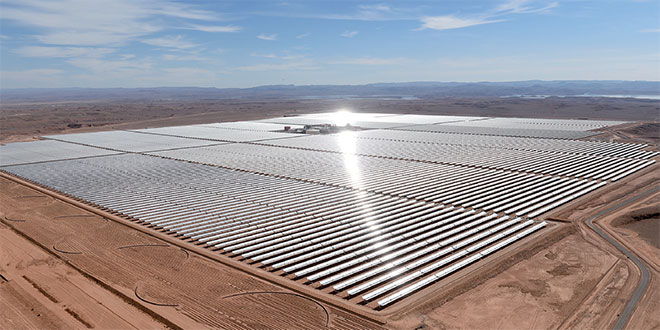
Morocco is rolling out its national energy strategy, a roadmap based on three pillars: renewable energies, energy efficiency, and regional integration, i.e., the development of energy corridors.
For the time being, solar energy accounts for a relatively small share of the Kingdom’s total installed capacity (12.2 GW) and electricity generated from renewable sources (5.6 GW, i.e. 46% of the installed capacity and 27% of the national production) (Photo: AFP)
The goal is to reach 52% installed capacity in renewable energies (solar, wind, hydraulic, biomass, and hydrogen) by 2030. This target will apparently be greatly exceeded, as installed capacity in renewable energies is expected to be around 60% by that date.
At present, solar energy accounts for a relatively small share of the Kingdom’s total installed capacity (12.2 GW) and of electricity generated from renewable energies (5.6 GW, i.e. 46% of the installed capacity and 27% of the national production). Electricity generated from solar energy amounts to only 1,063 MW, i.e.19% of the electricity generated by all renewable energies combined.
■ 3 GW of solar installation capacity by 2028
In the short term, energy produced from photovoltaic and thermal panels will play a major role in the rise of renewable energies. It is expected to gradually increase its share in the electricity mix and in the development of renewable energies. This was announced on February 4 in Casablanca, during the official launch of Solar Rooftop 500. On this occasion, several favorable arguments were put forward. The country is aiming for 3 GW of solar installation capacity by 2028. Apparently, the target will be met. The argument put forward is that there is currently a real craze for solar energy. Everyone is turning to photovoltaic panels + batteries for storage, which is considered not only very simple but also truly competitive.
■ Impetus with green hydrogen production
The other argument put forward, and not the least important, is the future decarbonization of the transport sector (road, air, and sea), which the country plans to achieve through the mass production of green hydrogen. To this end, seven investors have already been selected. They will invest US$37 billion to create many jobs (37,000 during construction and 10,000 during operation) and use 20 GW of renewable energy (10 GW for electrolysers ) to generate 8 million tons of green hydrogen and its derivatives annually (ammonia, methanol, e-fuels, etc.). It is reported that solar energy will reach at least 3 GW in this first pipeline of projects.
Aziz DIOUF