Sahara: Will Algiers play ball?
On the political front, the Security Council resolution paves the way for a new momentum, with the support of the United States.
US Ambassador to the UN Mike Waltz reiterated that the autonomy initiative is currently «the only basis» for achieving a just and lasting solution to this regional dispute. Washington urged «all parties to engage in serious discussions, with Morocco’s credible and realistic autonomy proposal as the sole basis, with a view to a just and lasting solution to this conflict.»
The US Ambassador to the UN, Mike Waltz, reiterated that the autonomy initiative is currently «the only basis» for achieving a just and lasting solution to this regional dispute. Washington thus urged «all parties to engage in serious discussions, with Morocco’s credible and realistic autonomy proposal as the sole basis, with a view to a just and lasting solution to this conflict». Waltz also emphasized the «firm support» of President Donald Trump. This is an achievable goal «this year» according to the US Ambassador, who stressed that the United States will spare no effort to « facilitate progress « toward this shared objective of peace and prosperity in the region.
It should also be remembered that, in parallel with the UN process, the United States is mediating between Morocco and Algeria, the parties directly involved in the artificial conflict over the Sahara, with a view to reaching a peace plan.
The American emissaries announced a 60-day period for Rabat and Algiers to resume dialogue and reach a peace plan. In his speech following the Security Council vote, His Majesty the King once again reached out to His eastern neighbor to overcome differences and tense relations. The royal logic remains the same: to find an honorable solution for Algeria, in an approach where there are no winners or losers. This approach, initiated in previous royal speeches, remains valid. For despite the historic victory in New York, Morocco «is not brandishing these changes as a trophy and has no desire to stir up antagonism or accentuate divisions», according to the royal speech. 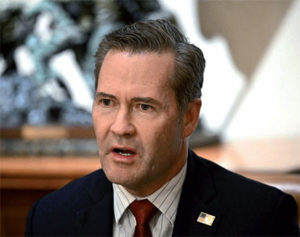 The Sovereign directly called on Algerian President Abdelmajid Tebboune to launch a dialogue between the two countries, «so that, with our differences behind us, we can lay the foundations for new relations based on trust, fraternity, and good neighborliness». The idea is to pursue «the revival of the Maghreb Union, based on mutual respect, cooperation, and complementarity between its five member States». Will the Algerian regime seize this opportunity today? For now, Algiers seems to be sticking to its guns. Initial reactions following the Security Council vote, in which its ambassador did not participate, were largely negative.
The Algerian ambassador to the UN criticized the text of the resolution, arguing that it contradicts UN doctrine. In reality, it is one of the pillars of Algerian foreign policy doctrine that is crumbling. The Algerian regime also appears to be in difficulty internally, after decades of exploiting this issue among its population.
Hence the importance of changing mindsets, in order to move from outdated approaches to co-development initiatives, backed by the many complementarities between the two countries.
In this context, talks under US supervision would help to shift positions. Algeria’s serious involvement in the negotiation process based on the autonomy plan will also be decisive in achieving a lasting solution to this issue.
Economic sovereignty
Today, two-thirds of the United Nations member States now consider the autonomy initiative to be the only viable framework for resolving this conflict. Alongside the diplomatic process linked to the formal recognition of the autonomy initiative, « recognition of the Kingdom’s economic sovereignty over its southern provinces has been widely extended to major powers such as the United States, France, Great Britain, Russia, Spain, and the European Union, which have decided to encourage investment in these provinces and promote trade with them ,» the Sovereign noted. It is in this context that these provinces « can now assert themselves within their regional environment, including the Sahel region, as a hub of development and stability, and a central axis of economic activity .»
Mohamed Ali MRABI