War in the Middle East: Can Morocco Avert the Crisis?
In its report «Global Trade Outlook and Statistics March 2026», the World Trade Organization (WTO) forecasts a slowdown in global merchandise trade to 1.9% in 2026, following 4.6% growth in 2025 driven by demand for artificial intelligence-related products. This slowdown is attributed to the conflict in the Middle East, a source of major macroeconomic uncertainty. Indeed, Ngozi Okonjo-Iweala, Director-General of the WTO, highlights the risks of sustained increases in energy prices and disruptions to supply chains. For his part, Fatih Birol, Director of the IEA, describes the energy crisis as a “major threat,” with a production loss of 11 million barrels per day (exceeding the combined impact of the two oil shocks of the 1970s) following damage to at least 40 energy sites. In light of these tensions, the European Commission is calling for a reduction in gas storage targets to ease pressure on prices. For Morocco, which is integrated into global trade, this context combines structural vulnerabilities with opportunities for strategic repositioning.
■ Performance and Regional Benchmarks. The detailed data in the tables appended to the WTO report reveal a particularly robust Moroccan trade dynamic compared to regional averages. I In the ranking of importers of goods excluding intra-EU trade in 2025, Morocco ranks 30th globally with a value of $87 billion and a market share of 0.4%, posting annual growth of 15%. This performance stands in stark contrast to the WTO’s forecasts for the African continent, which project 3.2% growth in merchandise imports in 2026 under the baseline scenario. Similarly, in the commercial services sector excluding intra-EU trade, Morocco ranks 28th among global exporters with a value of $32 billion and annual growth of 17%. These figures indicate that the Kingdom is significantly outperforming the projected global growth in trade in services of 4.8% for 2026, reflecting increased competitiveness in digital services and tourism despite a tense international environment.
■ Geopolitical Challenges and Energy Vulnerability
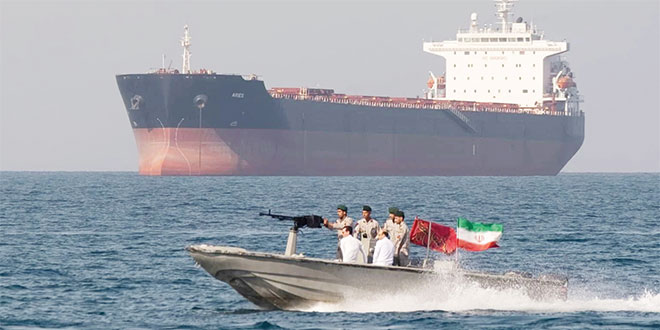
The main challenge identified by WTO economists for 2026 lies in the impact of the conflict in the Middle East on energy and commodity markets. The report indicates that the price of crude oil surged to around $90 per barrel in March 2026 and that disruptions in the Strait of Hormuz reduced maritime traffic from 138 ships per day to nearly zero. For an economy like Morocco’s, this volatility in energy prices poses an inflationary risk and adds to the cost of freight transport. The WTO’s alternative scenario, known as the high-energy-price scenario, projects a slowdown in global merchandise trade growth to 1.4% instead of 1.9%, with a more severe impact on net energy-importing regions. For Morocco, its geographic location and dependence on energy imports expose it to the same pressures on production and transport costs as the other net-importing economies mentioned in the analysis, particularly in Europe and Asia.
■ Food security and strategic advantages regarding inputs Beyond energy, the WTO report highlights a potential crisis in the fertilizer market, which is essential for global food security. The obstruction of Gulf trade routes is disrupting exports of urea and ammonia, on which major agricultural producers such as India, Thailand, and Brazil heavily depend. Against this backdrop of fragmented agricultural input supply chains, Morocco holds a major strategic advantage thanks to its phosphate reserves and fertilizer production capacity, although the report focuses specifically on Gulf exports. T The Kingdom’s ability to sustain its exports in a global market where fertilizers are becoming a critical resource could serve as an additional driver of growth. The resilience of Morocco’s exports of services and goods—which show double-digit growth rates in WTO tables—suggests that the country is already succeeding in adapting its supply chains and diversifying its partners, thereby reducing its dependence on disrupted trade routes in the Middle East.
Fatim-Zahra TOHRY