World Bank/Morocco: Half of talent is outside the economy
In Morocco, growth is accelerating, reforms are being implemented, women are studying more… but they are still working less. Less than one in five women currently participate in the labor market, a rate that places the country among the lowest in the world, despite two decades of educational efforts and social policies. This paradox weighs heavily on productivity, growth, and the sustainability of the national development model.
This diagnosis was at the heart of the press conference held on Tuesday, November 11, in Rabat, on the occasion of the launch of the World Bank’s new economic report for the Middle East, North Africa, Afghanistan, and Pakistan (MENAAP) region, entitled “ Jobs and Women : Untapped Talent, Unrealized Growth ”.
The World Bank report identifies seven major factors that explain the persistence of this imbalance. The first is the historically low level of female labor force participation. This is not a temporary situation but a deeply rooted economic and cultural barrier. The majority of women of working age remain outside the formal labor market, and the trend is changing little despite educational and demographic transitions.
Secondly, this under-representation is widespread across all regions and social backgrounds. This cross-cutting deficit is not linked to poverty but to an economic structure that reproduces the same marginalization everywhere.
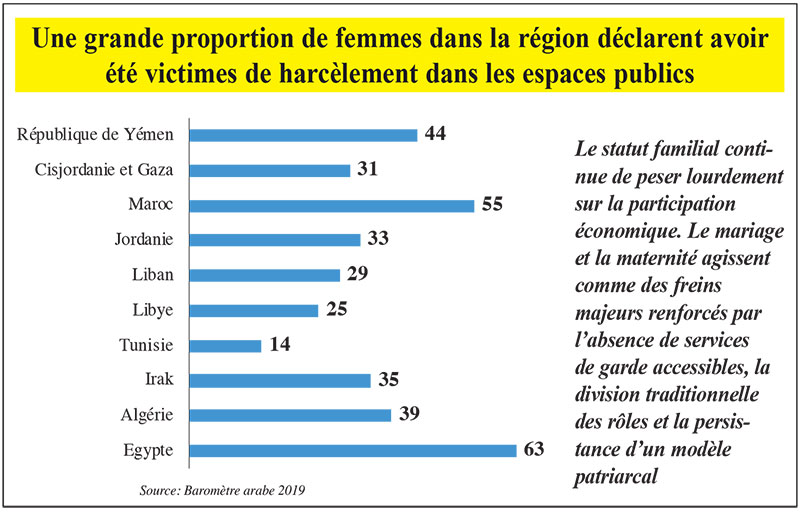
Third, family status continues to weigh heavily on economic participation. Marriage and motherhood act as major barriers, reinforced by the lack of accessible childcare services, traditional role divisions, and the persistence of a patriarchal model. Even among single women or women without children, participation remains low, a sign that the obstacles are structural as well as social. The report then highlights, as a fourth point, the fragility and inequality of the progress observed. The resilience of exclusion remains stronger than that of inclusion.
Fifth fact: a profound gap between educational gains and access to employment. Women have caught up with and even surpassed men in higher education, but this academic success is not reflected in the labor market. The sixth finding highlights higher structural unemployment among women. Many remain confined to the public sector, which is considered safer and more stable, but whose absorption capacity is declining.
Finally, the seventh fact highlights the extent of the gender pay gap, which is particularly pronounced among low-skilled female workers. Despite high levels of education, women continue to be paid less than men, reflecting persistent discrimination in hiring, promotion, and pay.
Khadija MASMOUDI