Changes in trade policies: What opportunities exist in Morocco?
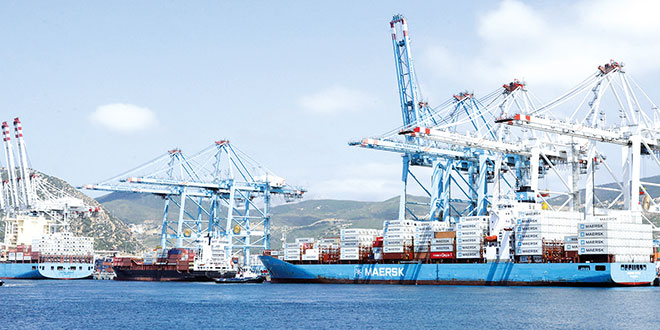
Changes in trade policies are reshaping global competition, creating winners and losers among exporters. This is a topic explored by UN Trade and Development (UNCTAD) in its recent report, « Who wins when trade policies shift? Policy Insights: New rules are reshaping global export competition — and determining which countries gain ground .» For Morocco, the major announcement is the elimination of Chinese tariffs starting May 1, 2026, a measure described as a «trade revolution» likely to strengthen the Kingdom’s access to the Chinese market.
When governments adjust tariffs, trade preferences, or other trade costs, they change prices and competitive conditions. Some exporters gain while others lose, altering trade flows and procurement decisions, according to UNCTAD experts
■ The Chinese Turning Point: A Trade Revolution
In a historic decision that is reshaping the dynamics of global trade, China has announced the complete elimination of tariffs for 53 African countries (including Morocco), effective May 1, 2026. This decision comes at a crucial time, as Morocco is projected to experience robust growth of 4.4% for 2026 (following 4.6% in 2025), according to the Coface barometer of February 2026. The agriculture, textile, food processing, and seafood sectors could benefit from this preferential access , even as China seeks to diversify its supply sources.
■ The American shockwave: Between threats and opportunities
The picture is far from idyllic. The UNCTAD report published in February 2026 paints a stark picture: changes in US trade policy have created a «more restrictive and unequal» landscape. Since 2024, average US tariffs have increased by nearly 15 percentage points, and only 20% of US imports still benefit from most-favored-nation treatment. However, this situation is creating unexpected windfalls.
■ Resilience and diversification put to the test
Morocco enters 2026 with a B1 «low risk» rating according to Allianz Trade’s 2026 Country Risk Atlas, reflecting solid macroeconomic fundamentals and an accommodative monetary policy supported by contained inflation (~1%) (Allianz Trade, 2026). The post-drought agricultural recovery, a dynamic tourism sector (nearly 20 million visitors in 2025), and the expansion of financial services are consolidating the Kingdom’s status as a regional hub (Coface, February 2026). However, persistently weak automotive demand in Europe, its main export market, exposes the industrial sector to external shocks, while the opening of the Chinese market in May 2026 requires a rapid move upmarket to transform this opportunity into a sustainable competitive advantage.
Fatim-Zahra TOHRY