Deficit, Compensation, Operating Expenditure: Pressure Points in the 2026 Budget

The budget situation during the first four months of 2026 points to a gradual tightening of the State’s fiscal room for maneuver under the combined effects of mounting social commitments, rising operating expenditures and the return of energy-related risks.
The additional MAD 20 billion budget allocation, approved by the Government Council to address the repercussions of the war in the Middle East, reflects increasing pressure on budget execution. The government nevertheless continues to project confidence regarding the trajectory of public finances. The executive expects economic growth of 5.3%, a deficit reduced to around 3% of GDP, and foreign exchange reserves reaching MAD 469.8 billion, equivalent to nearly six months of imports. However, data from the Treasury’s Charges and Resources Statement (SCRT) as of end-April indicate that the first signs of imbalance are already emerging. The budget deficit reached MAD 19.1 billion at end-April, compared with MAD 17.5 billion a year earlier.
Tax revenues remain on a positive trajectory. They increased by 8.9%, representing nearly MAD 11 billion in additional revenues year-on-year. Corporate income tax (CIT) accounts for the bulk of this momentum, posting an increase of 24.9%, equivalent to MAD 9 billion in additional revenues. By end-April, the collection rate had already reached 48.1% of annual forecasts. This performance, however, remains concentrated around a limited number of growth drivers. Part of the increase in corporate tax receipts stems from advance payments and additional regularization settlements, whose evolution will depend on companies’ year-end financial results. Other tax categories have grown more moderately. VAT increased by only 3.9%, while personal income tax (PIT) declined following the disappearance of the exceptional effect linked to the voluntary tax regularization operation recorded in early 2025. At the same time, several revenue sources planned under the Finance Law have yet to materialize.
No revenues have so far been generated from State asset disposals or innovative financing mechanisms, which together were expected to contribute MAD 26 billion under the 2026 Finance Law.
A More Constrained Budget Equation
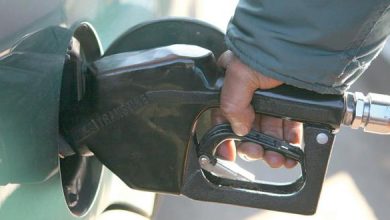
Budgetary pressures are becoming more visible on the expenditure side. Total expenditure increased by MAD 11.7 billion, exceeding revenue growth, which was limited to MAD 10.1 billion. The ordinary balance moved into deficit at MAD 1.96 billion, compared with a surplus of MAD 2.49 billion a year earlier. Compensation expenditure still recorded a limited decline of 6.2% at end-April, reaching MAD 7.1 billion. This trend, however, may prove only temporary. Decree No. 2.26.395 aims to finance support measures for butane gas, transport and electricity introduced in response to regional geopolitical tensions. The monthly cost of these measures is estimated at around MAD 1.6 billion.
Any prolonged period of energy tensions would rapidly increase the budget burden over the coming months. The deterioration is also being driven by rising operating expenditure. Personnel expenses increased by MAD 5.6 billion, notably as a result of commitments stemming from social dialogue agreements.Expenditure on goods and services rose by MAD 7.3 billion, mainly due to higher spending on equipment.
K.M.