How Customs Is Entering the Era of Data-Driven Control

23.5 billion MAD. That is the value of reassessments carried out by Customs in 2025 in relation to under-invoicing — the practice of declaring goods at the border at prices below their actual value in order to reduce duties and taxes owed. Up 33% year-on-year, this figure is perhaps one of the most revealing indicators in the annual report of the Customs and Indirect Tax Administration. It reflects not only the scale of the phenomenon but also the progress made in customs controls.
Because under-invoicing differs from most other forms of fraud. It cannot be seized in a truck or photographed on a dock. It exists in the gap between a declared price and a market value — or more precisely, in a statistical anomaly that algorithms eventually detect. Invisible and diffuse, it often blends into the gray areas of commercial valuation. And the MAD 23.5 billion reassessed, which generated MAD 6.97 billion in additional revenue for the State, likely represents only part of what still escapes detection. Targeting High-Risk Operators Before Their Goods Even Reach Customs To narrow this gap, the administration significantly reorganized its enforcement arsenal in 2025. Its online customs clearance platform, BADR, integrated 269 new targeting mechanisms, combining indexing rules, analytical annotations and sectoral monitoring. The number of fraud alerts processed by the platform doubled within one year, rising from 1,540 to 3,076 cases.
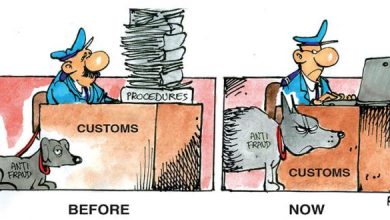
Post-clearance controls — consisting of verifying commercial transactions using accounting records after customs clearance — identified MAD 489 million in evaded duties, of which MAD 326 million was recovered, compared with MAD 206 million in 2024. Meanwhile, the National Targeting Unit identified MAD 97 million in compromised duties, recovering MAD 44 million. Behind these results lies a deeper transformation: Data has become customs’ primary control instrument. The National Supervision and Control Center, operational since this year, centralizes real-time flows from twelve strategic sites, including ports, border crossings and industrial zones. An additional 1,200 agents were recruited and operational brigades were entirely restructured. But perhaps the most significant change lies elsewhere. The automatic cross-checking of declared prices against international reference databases now allows customs authorities to identify high-risk operators before their goods even arrive at customs counters. Customs closed the year with record revenues of MAD 161 billion, up 11%. Imports increased by 8%, more than three times the pace of export growth. The trade deficit reached MAD 353 billion, an increase of 16%. Customs performance is also improving because imports continue to expand.
Reassessments related to under-invoicing have reached record levels. Yet record levels of fraud detection do not necessarily mean fraud itself is declining. The more trade flows increase, the more sophisticated controls become — and the more they reveal the scale of practices that still remain beyond the radar.
K.M.