MAD 210 billion for territorial development
The opening of Parliament’s spring session came just after the Council of Ministers meeting. Members of Parliament are now more aware of the strategic importance of the new generation of integrated territorial development programs announced by the Sovereign in his latest Throne Day speech.
The opening of Parliament’s spring session took place the day after the Council of Ministers meeting. Lawmakers are increasingly aware of the strategic importance of the new generation of integrated territorial development programs announced by His Majesty the King in his latest Throne Day speech
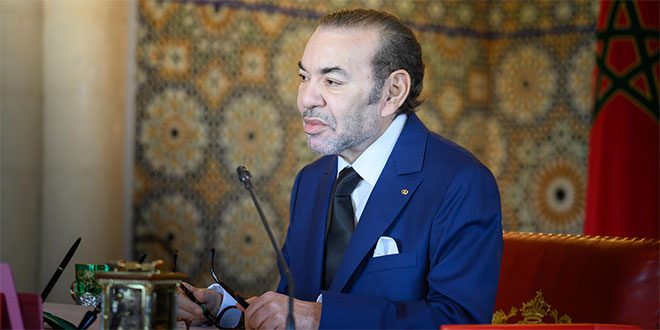
Following fieldwork and meetings held across provinces under the supervision of governors, Abdelouafi Laftit used this meeting, chaired by His Majesty the King, to present the broad outlines of the governance of these programs, based on a new approach. The total budget amounts to nearly MAD 210 billion over a period of eight years.
It should be noted that just before the Council of Ministers, a Government Council meeting was held to review the draft texts on the agenda. These included two organic bills, one relating to regions and the other concerning appointments to senior positions.
From now on, the priorities of integrated territorial development programs will be determined based on needs expressed by citizens at the local level. The minister emphasized that these programs were developed through consultation and listening sessions held across all provinces of the country. For each province, a territorial diagnosis was carried out, including an analysis of socio-economic indicators and the identification of strengths and weaknesses in terms of access to employment, education, healthcare, water, and territorial upgrading programs.
Governance mechanisms
A comprehensive plan has been put in place outlining governance, implementation, and evaluation mechanisms for this new generation of programs, along with related communication tools.
In terms of governance and steering, the adopted methodology is rooted at the local level, which is responsible for program design and monitoring. The national level ensures overall coordination and mobilization of the necessary funding for implementation.
At the local level, it is essential to establish a committee chaired by the governor and composed of elected officials and representatives of decentralized state services. This committee will be responsible for designing programs and monitoring project implementation. It will also handle consultations with the local population to address their needs and ensure the optimal use of the targeted regions’ potential.
At the regional level, the wali will chair a committee responsible for consolidating integrated territorial development programs within their jurisdiction and ensuring project harmonization.
In addition, a national committee will be created, chaired by the Head of Government. Composed of relevant ministerial departments, its mission will be to validate the selected programs, ensure their integrated and participatory nature, and establish monitoring and evaluation indicators to measure their impact.
Digital platform for monitoring
Oversight and accountability are also key components. The implementation of these programs will be subject to annual audits conducted jointly by the General Inspectorate of Finance (IGF), under the Ministry of Economy and Finance, and the General Inspectorate of Territorial Administration (IGAT) of the Ministry of the Interior. The aim is to assess performance and ensure compliance with execution procedures.
The system designed by the services of Abdelouafi Laftit also includes a strong communication component. To this end, a dedicated digital platform will be created, allowing citizens and institutional stakeholders to access all information related to program planning, progress status, and project implementation. The objective is to ensure maximum transparency and continuous monitoring of actions undertaken.
Implementation mechanisms
The Ministry of the Interior has also addressed the execution mechanisms of this new institutional architecture. Abdelouafi Laftit proposed the creation of joint-stock companies (SAs), whose boards of directors would be chaired by regional council presidents. These entities would replace the Regional Project Implementation Agencies. In this context, a draft law amending the organic law on regions was adopted by the Council of Ministers. The objective is to reconcile governance and public oversight requirements with management flexibility and performance efficiency, thereby improving project quality and accelerating implementation.
This transformation into joint-stock companies will provide greater flexibility and efficiency in management. The draft law also aims to establish a legal and institutional framework to ensure the optimal and effective implementation of this new generation of integrated territorial development programs.
Mohamed Chaoui