Public finance management: A new strategy in place
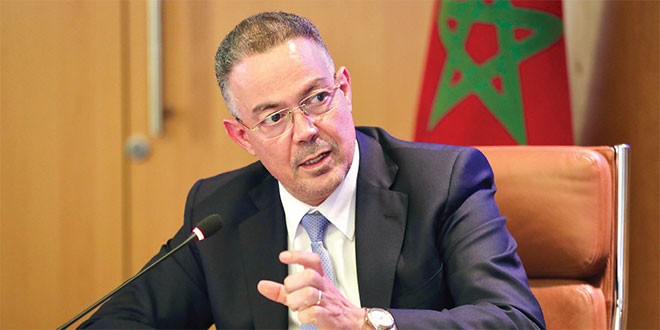
Fouzi Lekjaâ, the Minister Delegate for the Budget, drew on the PEFA report to develop –for the first time in Morocco–a public finance management strategy through 2032, in partnership with all donors
For the first time, Morocco is adopting a strategy to guide public financial management (PFM) through 2032. For the first time, Morocco has adopted a strategy to guide public financial management (PFM) through 2032. It was scheduled to be released midweek. Its implementation will be carried out through the upcoming adoption of the reform of the Organic Law on Finance and the application of a public investment management framework. Fouzi Lekjaâ, the Minister Delegate for the Budget, will chair the interministerial steering committee for PFM reform. The technical monitoring committee is headed by Aziz Khayati, Director of the Budget at the Ministry of Economy and Finance. For its proponents, this strategy reflects a proactive commitment to shaping the vision for public finance reform. Moreover, the Ministry of the Budget drew on the PEFA report to develop this strategy, which was formulated through consultation with all relevant institutions and in partnership with all donors (the World Bank, the EU, the AfDB, etc.). It should be noted that this strategy also aims to strengthen donors’ confidence in the soundness of our public finance system and its capacity to support major reform initiatives and sectoral strategies.
As a reminder, the results of the assessment conducted by donor experts confirmed the soundness of Morocco’s system and the significant progress made in several areas, particularly regarding budgetary credibility, financial transparency, and the quality of oversight mechanisms.
However, this evaluation also identified certain areas for improvement aimed at further strengthening budget predictability, transparency, and the efficiency of public resource management. These weaknesses prompted the Minister in charge of the Budget to work on developing a strategy to consolidate the gains made and provide coherent responses to the challenges raised, according to the strategic framework note.
This framework is structured around strategic pillars, the first of which relates to performance and will be broken down into three key areas. First, the goal is to refine performance-based budgeting in terms of results, costs, and budget scenarios. This will be achieved through the transition to impact-oriented program budgets and the strengthening of management control.
The second pillar concerns sustainability. This involves taking more coordinated and incentivized action to mobilize resources, with an emphasis on broadening the tax base, targeted actions for uncollected taxes, and improving the quality of tax audits. In addition, a holistic approach to budget risk management will need to be implemented. This will primarily involve developing a comprehensive and dynamic framework for identifying and quantifying budget risks.
Mohamed CHAOUI