Series of articles on Morocco: How Le Monde lost the esteem of Moroccans
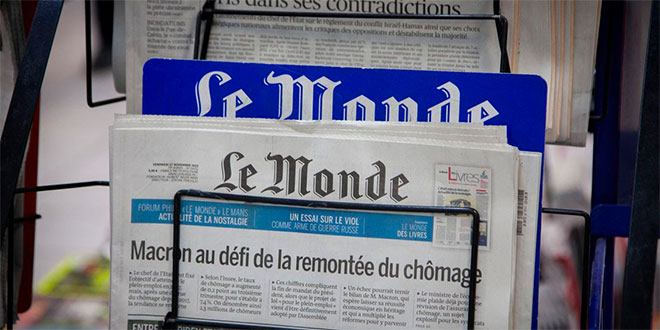
By publishing a series of articles on the monarchy in Morocco, the French daily Le Monde aimed to make a splash. Today, after the publication of all the articles in this “series,” the impact is far from the hoped-for result. Ultimately, this supposed investigation fizzled out.
On paper, the subject had everything it needed to “seduce” and shake up public debate. Especially since it attacks the country’s central institution. Except that in reality, the response has been weak, almost muted. This can be explained first by the effect of saturation, with a feeling of “déjà vu.” This is not the first time that the Moroccan monarchy has been the subject of articles in Le Monde. By repeating the same exercise over and over again, the newspaper has ended up creating a sense of weariness. Moroccans are not discovering anything new: the same critical angles, the same opposition figures being highlighted, the same findings. And as authors Pierre Péan and Philippe Cohen point out in their book “La face cachée du Monde” (The Hidden Face of Le Monde), «In each of the cases listed, Le Monde conducts an investigation that is exclusively accusatory. The defense’s voice, when it exists, is strictly regulated, so that it ultimately only serves to validate the fairness of the sentence.” This analysis applies perfectly to the series of articles on Morocco.
This raises the question of credibility. For years, the Le Monde newspaper has approached Morocco and the monarchy with a biased perspective. The choice of sources, often limited to critical voices or those far removed from the ground, fuels the idea of a selective, biased narrative. As a result, Moroccan public opinion no longer believes in these “investigations,” regardless of their content.
Motivations
It must be said that repetition wears thin. By constantly returning to the monarchy with the same tone, the French newspaper has ended up locking itself into an image of being a “declared adversary.” And in the current regional context, interpretations are multiplying regarding the motivations behind this series of articles, with some pointing to a campaign waged against Morocco or on behalf of its adversaries. “Anyone who wants to become a power and deal on an equal footing with other powers, including the state, must therefore demonstrate their ability to harm, and even punish. This is exactly what Le Monde is doing in a number of cases ”, explained the authors of “La face cachée du Monde” (The Hidden Face of Le Monde). For Moroccans, who are deeply attached to the monarchy, the gap between Le Monde’s perspective and the country’s priorities is just as striking. The French daily newspaper’s articles on Morocco seem detached from reality, like a Parisian exercise that fails to resonate with the daily lives of Moroccans. Ultimately, Le Monde’s series missed the mark because it is part of a mechanism that has become sterile. In a country where the monarchy retains strong legitimacy and popularity, and where social priorities take precedence over political controversies, this type of exercise comes up against a wall of indifference. The moral of the story: repeating the same narrative ultimately weakens it. By pulling on the same string, Le Monde has lost its audience and the esteem of the Moroccan public.
M.A.M.