Stocks, Renewables, Gas: Morocco’s Energy Shock Absorbers
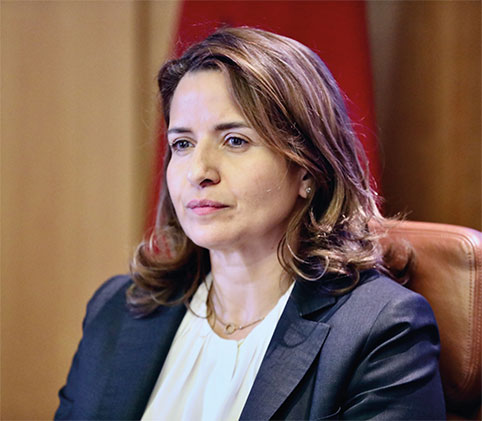
«The regulatory framework is being strengthened, notably through the role of the Competition Council, to ensure price and margin transparency and to prevent any unjustified increases»
– L’Economiste: The war in Iran is disrupting a significant share of global oil flows. Is Morocco currently exposed to a real risk of fuel supply disruption, or only to a risk of rising prices?
– Leila Benali: The current crisis confirms the relevance of the strategic choices undertaken by Morocco under the High Guidelines of His Majesty King Mohammed VI, may God assist him, since 2009.
By anticipating vulnerabilities linked to our energy dependence, the Kingdom made a proactive choice to pursue a transition based on diversification, renewable energy, and the resilience of the energy system.
The current geostrategic context, by its magnitude, exceeds the combined crises of 1975, 1979, and 2002. Global energy, petrochemical, health, and food supply chains are experiencing major disruptions, particularly in transport, insurance, and logistics, resulting in high price volatility. The damage to certain global energy infrastructures is difficult to quantify but is certainly significant.
That said, Morocco faces no immediate risk of supply disruption. The domestic market continues to be normally supplied, thanks to diversified import sources, the mobilization of operators, and close coordination among stakeholders.
– Does Morocco currently have a clear strategy to diversify the geographic sources of its oil supplies in order to reduce exposure to high-risk areas such as the Strait of Hormuz?
– Yes. Morocco has a clear strategy to diversify both its supply sources and logistical routes, in order to reduce dependence on high-risk areas and ensure long-term energy security.
In the current context, this diversification stands as a structural choice that strengthens the resilience of our supply system and our ability to withstand external shocks. This strategy has concretely ensured uninterrupted supply despite a highly disrupted international environment and a series of shocks since 2021, the latest being unprecedented flooding in the country due to climate change.
– What is the current level of Morocco’s strategic fuel stocks, and are they sufficient to absorb a prolonged disruption in international deliveries?
– Thanks to the responsibility and mobilization of all stakeholders, diesel stocks cover approximately 47 days of consumption, gasoline more than 49 days, while overall storage capacity—having increased by more than 30% between 2021 and 2025—now reaches nearly 80 days.
These levels provide a sufficient safety margin to absorb potential disruptions, even in a tense international context. We have seen concrete proof of this recently: despite several port congestion episodes between December 2025 and February 2026, no shortages were recorded.
– In such a scenario, should exceptional shock-absorption mechanisms be considered for households if oil prices remain above $100?
– In such a scenario, Morocco’s approach is calm and gradual: protecting purchasing power and the economy through targeted, operational, and rapidly deployable mechanisms.
In line with the social state model driven under the High Guidelines of His Majesty King Mohammed VI, the State has made significant efforts to cushion the impact of rising prices. Subsidies for butane gas currently reach nearly 78 dirhams per 12 kg cylinder, electricity tariffs are maintained despite rising costs—with an effort of around 400 million dirhams per month—and direct support is provided to transport professionals at approximately 3 dirhams per liter.
In total, more than 1.6 billion dirhams have been mobilized to support households and contain the effects of international price volatility.
– What is the current timeline for ramping up production at the Tendrara gas project? Who will receive the first commercial deliveries, and what contribution can this project make to national energy security?
– As you know, I never comment on specific projects, especially when shareholders are publicly listed.
Following reserve certification in 2018 and the granting of an exploitation concession, the project experienced significant delays. This is why we have undertaken a deep reform of the gas sector, including the transformation of ONHYM into a joint-stock company.
Our concern is that the financing of this short pipeline may be delayed, and we are calling on developers regarding this issue. Beyond its implementation timeline, this project contributes to diversifying supply sources while supporting the integration of natural gas as a transition energy within the national energy mix.o
Khadija MASMOUDI