Stronger but still fragile growth

After several years of climate shocks, imported inflation, and external tensions, the Moroccan economy is beginning to recover. According to the 2026 Economic Forecast Budget of the High Commissioner’s Office for Planning (HCP), growth is expected to reach 4.7% in 2025 before settling at 5% in 2026.
The scenario paints a picture of a more resilient economy, driven by domestic demand, investment, and a more favorable price environment. It also highlights well-known weaknesses: dependence on the agricultural cycle, a structural trade deficit, negative contribution from external demand, and still limited returns on investment. All these factors will weigh on the country’s ability to transform this cyclical recovery into sustainable growth. If it materializes, this acceleration would mark a turning point after more than a decade of volatile growth. However, it is based on factors and assumptions that remain exposed to climate hazards and an uncertain international environment.
The primary driver of the recovery remains agriculture. After a drought-stricken 2024, the HCP anticipates an above-average 2025-2026 agricultural season, buoyed by improved rainfall and water conditions. Agricultural value added is expected to grow from 4.5% in 2025 to 10.4% in 2026. Its contribution to growth is expected to reach 1.1 points in 2026, compared with 0.4 points the previous year.
Beyond cereals, the expected improvement in livestock farming, linked to the gradual rebuilding of livestock numbers and the delayed effects of the royal decision concerning Eid al-Adha, would reinforce the rebound in the primary sector. As is often the case, agriculture acts as an amplifier of the cycle, with direct knock-on effects on rural incomes and consumption.
The 2025-2026 scenario is also based on the continued strength of non-agricultural activities, which are expected to continue to grow at a rate of over 4%. After 4.5% in 2025, they are expected to grow by 4.3% in 2026, a sign of a generally positive productive dynamics.
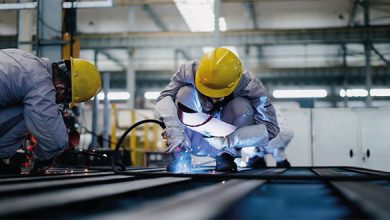
Secondary activities would grow by 4.8% in 2025 and then by 4.2% in 2026, with a stable contribution of around 1.1 points to growth over the two years. Manufacturing would grow by around 4%, driven by agri-business, chemicals, and global trades. Construction is expected to grow by nearly 6% in 2025 before slowing to 4.1% in 2026. This is due to the gradual completion of certain major projects, while remaining supported by infrastructure, housing, and projects linked to international deadlines.
The tertiary sector is expected to confirm its central role. Its growth is projected to reach 4.5% in 2025 and 4.3% in 2026. Its contribution to GDP is expected to be 2.4 percentage points in 2025 and 2.3 percentage points in 2026, accounting for nearly half of total growth.
Khadija MASMOUDI