
The time for a water emergency: Between scarcity and resilience
A call for collective responsibility. Faced with the increasing pressure of climate change and water scarcity, Morocco is calling for collective action to adopt a responsible and sustainable use of this vital resource.
Faced with water scarcity exacerbated by climate change, Morocco is calling for collective action to make water conservation a civic, educational, and institutional reflex
Water conservation is not limited to reducing consumption, but requires a change in daily behavior, supported by schools, the media, associations, and households. Innovation, through recycling, water-efficient equipment, and modern irrigation, is essential for building a sustainable and equitable water future.
While the total volume of water stored in Morocco’s dams amounted to 5,176 million cubic meters on November 10, 2025, a slight increase of 4.1% compared to the same period in 2024, the overall filling rate remained stagnant at 30.8%, according to data published on the Maadialna.ma website, an information platform managed by the Ministry of Equipment and Water.
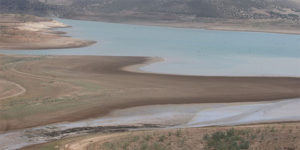
In the water landscape, the contrasts are striking. On the one hand, nearly empty reservoirs testify to the increasing pressure on water resources in the central regions. On the other, some dams show encouraging filling levels, particularly in the south and north. For example, the Casablanca region, heavily dependent on the Oum Er- Rbia river basin, is facing an acute water crisis, with the latter showing an overall filling rate of only 8.6%. The Al Massira dam, the main reservoir supplying the metropolis, is only 2% full, which would jeopardize the supply of drinking water and agricultural water. Added to this is the critical situation of the Sidi Maachou dam, whose level barely exceeds 1%, illustrating the urgent need to adopt alternative solutions to the depletion of traditional resources.
In response to this situation, Morocco launched a supplementary emergency program of 14.9 billion dirhams (USD 1.6 billion), integrated into the 2020–2027 National Drinking Water and Irrigation Program. This initiative aims to guarantee reliable access to drinking water in the most affected areas, both rural and urban, while strengthening the country’s resilience to future water challenges.
Led in particular by the Ministry of the Interior, this plan relies on shared governance with local authorities and includes transformational projects, among them six water transfers from desalination plants. The most advanced operations include the connection of the Loukkos and Tangiers river basins, with a transfer of 100 million cubic meters / year between the Oued Makhazine and Dar Khrofa dams, as well as the construction of a pipeline carrying 60 million cubic meters/year of desalinated water from Jorf Lasfar to the Dourate station, thus strengthening the water security of large urban areas.o
Fatim-Zahra TOHRY