World Cup 2030: The private sector faces a real-world test
The Morocco-Spain-Portugal Business Forum dedicated to the 2030 World Cup, organized by the CGEM (General Confederation of Moroccan Enterprises), the CEOE (Cooperative of Employers of Morocco), and the CIP (Interprofessional Conference of Morocco), marks a shift to a more operational phase.
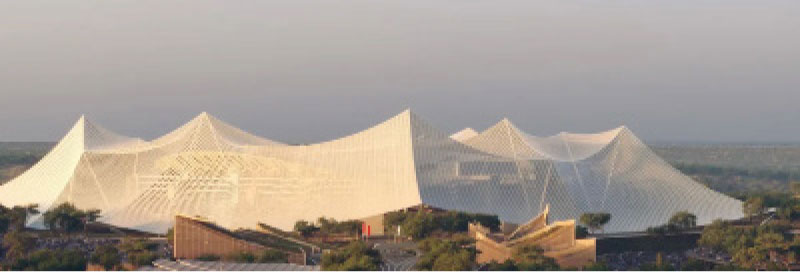
A key component of Morocco’s preparations for the 2030 World Cup, the Grand Hassan II Stadium in Casablanca is designed to accommodate 150,000 spectators150.000 spectateurs
Gathering at the Mohammed VI Football Complex on Tuesday, February 10, public officials and business leaders placed the private sector at the heart of the initiative. For Fouzi Lakjaa , Minister Delegate in charge of the Budget and President of the Royal Moroccan Football Federation, the starting point is clear. The 2025 Africa Cup of Nations served as a demonstration. «Morocco organized the best AFCON in history», he declared.
More than 2 billion euros in economic benefits
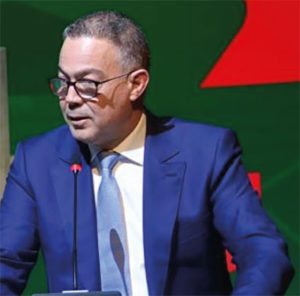
Gathered at the Mohammed VI Football Complex on Tuesday, February 10, public officials and business leaders placed the private sector at the heart of the strategy. For Fouzi Lakjaa , Minister Delegate for the Budget and President of the Royal Moroccan Football Federation, the starting point is clear. The 2025 Africa Cup of Nations served as a demonstration (Ph. FRMF)
Beyond its organizational excellence, the event generated over €2 billion in economic benefits, with approximately €1 billion invested in sports infrastructure. More than 60,000 direct and indirect jobs were created, and over 3,000 Moroccan companies were involved. A masterstroke as we look ahead to the major event of 2030, which marks a historic milestone. The World Cup will celebrate its centenary, starting with the first edition held in 1930. For the first time, it will be hosted on two continents.
This unprecedented format requires constant coordination between Morocco, Spain, and Portugal. The event will feature 101 matches concentrated in a short period. National teams will move between cities and countries, without being assigned to a specific territory. A team could play in three different countries consecutively. This organization necessitates a close coordination of transportation, logistics, security, and flow management.
A «collective intelligence» capable of anticipating risks
In an international context marked by geopolitical tensions and economic uncertainties, Lakjaa emphasized the need for collective mobilization and a proactive approach capable of anticipating risks. The president of the CGEM (General Confederation of Moroccan Enterprises), Chakib Laalej, for his part, placed the World Cup within a dynamic of transformation already underway. He recalled the Spanish example: «The 1982 World Cup and the 1992 Barcelona Olympics were catalysts for modernization and exceptional economic repositioning for Spain». For him, 2030 must play a comparable role for the three countries. «Invest together, innovate together, and create value together», he declared, stressing the practical dimension of the forum. According to him, the World Cup does not create transformation, it accelerates and strengthens it. The 2025 Africa Cup of Nations provides an illustration of this.
Integrating very small, small and medium-sized enterprises into value chains
In two years, Morocco has achieved in terms of infrastructure what could have taken a decade. The challenge for 2030 is to further expand this impact. The current situation is ideal. Growth is projected to exceed 5% in 2026, inflation is around 1%, and foreign direct investment reached a record high in 2025. Domestic private investment is also at its highest level. In this context, the CGEM (General Confederation of Moroccan Enterprises) emphasizes the integration of micro, small, and medium-sized enterprises (MSMEs) into the value chains generated by the event. The joint organization with Spain and Portugal places Moroccan companies in a direct comparative environment with mature European economies…
Express connections, train stations, highways, airport…
Beyond stadiums, the mobility sector is attracting significant investment. The 430-kilometer extension of the high-speed rail line to Marrakech will complement the Tangiers – Kenitra axis. Tenders have been issued, and contracts are being awarded to Moroccan companies and foreign partners in a near 50/50 split. Regional express networks are planned for Casablanca, Rabat, and Marrakech. New stations will accompany these developments. Furthermore, the highway network, currently 1,850 kilometers long (1,149 miles), is slated to reach 3,000 kilometers (1,864 miles) by 2030. Several major routes are planned, along with dedicated access to large stadiums to streamline traffic flow on event days. Here again, national companies are involved in a significant portion of the market. The airport sector is also affected. In Casablanca, the construction of a third terminal at Mohammed V Airport aims to anticipate the increase in international traffic.
Moroccan companies already at work
AS the deadline approaches, the infrastructure project is taking on a strategic dimension. During the forum, emphasis was placed on the direct involvement of Moroccan companies in the construction of key facilities. On the sporting front, Morocco will provide six stadiums that meet FIFA standards. The Moulay Abdellah Complex in Rabat and the Grand Stadium of Tangiers are already operational, having hosted matches of the 2025 Africa Cup of Nations.
In Rabat, the stadium was completely demolished and rebuilt, reaching a capacity of 75,000 seats. Similarly, in Tangiers, a major upgrade brought the stadium up to international standards. The work, from earthworks to landscaping, was carried out by Moroccan companies and completed on schedule. The flagship project remains the future Hassan II Stadium in Casablanca. With a planned capacity of 150,000 seats, it stands as the centerpiece of the national infrastructure. Here too, the earthworks are being handled by a Moroccan company, while the infrastructure is being built by a consortium of national firms. The construction phases are progressing according to schedule. Other stadiums, notably in Marrakech, Agadir, and Fez, will also undergo upgrades to meet international standards.
Amine BOUSHABA